

Why Do I Feel More Socially Awkward without Alcohol?
Table of Content
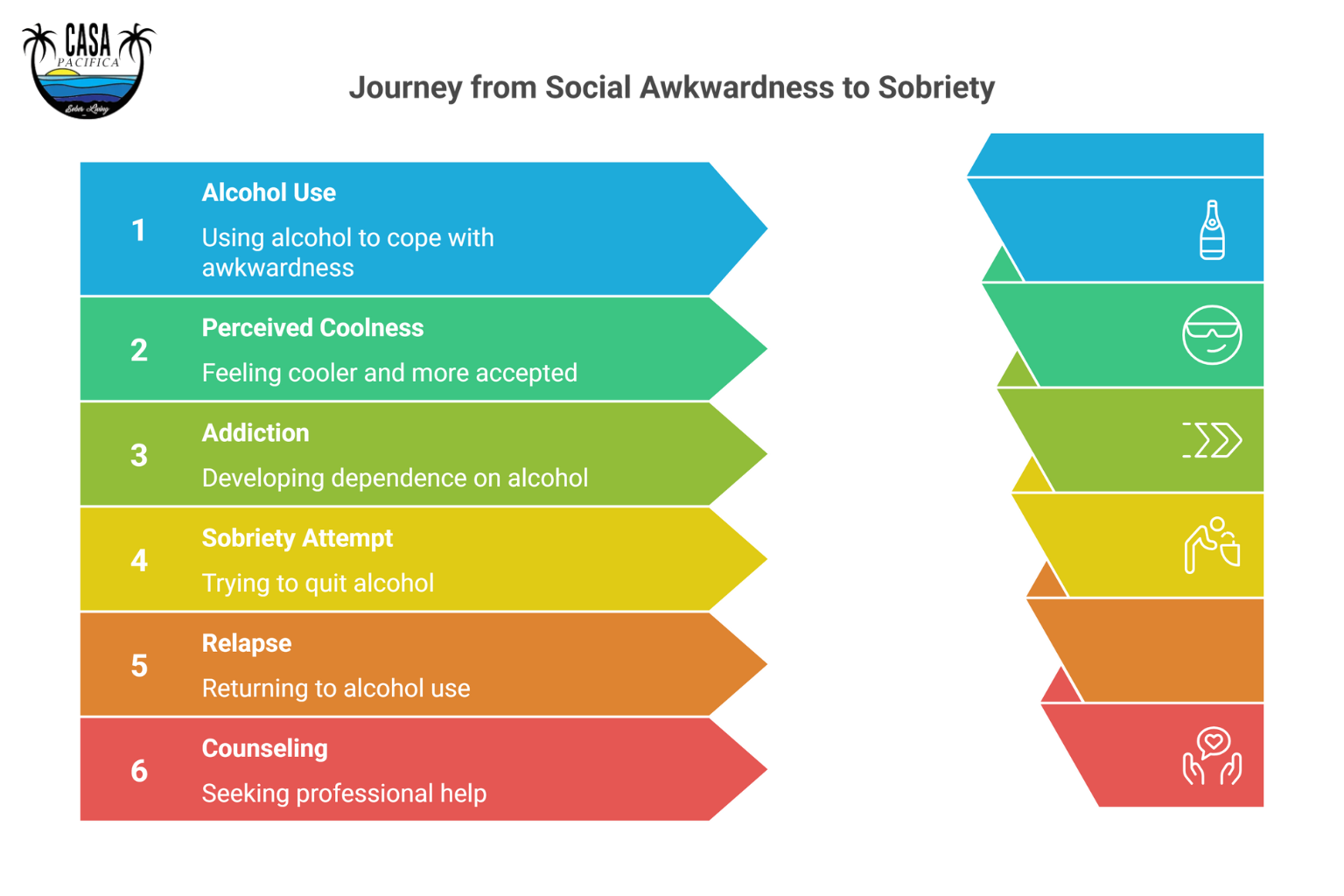
Sobriety brings clarity. It brings fresh starts. But it can also bring discomfort — especially in social situations. Many people describe feeling more self-conscious or awkward when they stop drinking or using substances. For some, the social unease is confusing: why does something that used to feel effortless now feel uncomfortable?
Social Awkwardness as a Matter of Perception
If that sounds familiar, you’re not alone. For many men in early recovery, the hardest part isn’t staying sober — it’s learning how to feel comfortable and confident around others again. Social skills that once felt automatic can suddenly feel foreign. Without alcohol or drugs acting as a buffer, emotions and interactions can feel more intense and vulnerable.
This article explores why social awkwardness happens in sobriety, and more importantly, how you can overcome it and build real confidence that isn’t dependent on substances.
Why Sobriety Can Make Social Situations Feel Uncomfortable
- Your brain is recalibrating
Alcohol and many substances temporarily soften inhibitions and quiet the inner critic. They reduce stress signals and mute self-consciousness — which is why many people feel more relaxed when drinking. When you remove substances, the brain needs time to adjust to functioning without them. During this adjustment period, you may feel:
- More aware of yourself
- More sensitive to social cues
- More anxious or self-conscious
- More afraid of judgment
This doesn’t mean something is wrong. It means your mind and nervous system are healing and rebalancing.
- You’re meeting the real version of yourself
Substances often create a “social version” of people — outgoing, bold, funny, uninhibited. Sobriety removes that layer, and you’re left meeting the real you again. That can feel strange at first.
In early recovery, many people ask:
- Who am I without drinking?
- Will people still like me?
- What is my personality sober?
- How do I talk to people without numbing the fear?
These questions are normal. You are learning your natural social identity — maybe for the first time.
- You may be facing old anxiety without numbing it
Some people discover that alcohol or drugs masked underlying issues such as:
- Social anxiety
- Low self-esteem
- Trauma
- Fear of rejection
- Difficulty communicating
- Past negative experiences
When substances are removed, the underlying emotions may rise to the surface. It can feel intense, but this is actually a positive step. You are finally in a place where you can address these feelings honestly and develop healthier strategies.
- You’re entering social spaces with new awareness
Sobriety increases awareness. You may notice things you used to overlook — the energy of a room, the tone of conversations, the behavior of others. You may also see social situations more clearly, without the “gloss” of alcohol.
For a while, this heightened awareness can feel overwhelming. But with time, it becomes a strength — you become more in tune with your environment and more grounded in how you engage with others.
The Good News: Social Awkwardness in Sobriety Does Not Last
It’s important to understand that this discomfort is temporary. It does not mean you’re socially incapable. It does not mean you’ll feel awkward forever. In fact, most people find that:
- Their social confidence becomes stronger than before
- Their relationships become more authentic
- Their communication becomes more honest
- Their self-esteem grows naturally
- They feel more comfortable in their own skin
Sobriety eventually produces a level of confidence that alcohol never could.
How to Navigate Social Awkwardness in Early Sobriety
Here are effective strategies that help ease discomfort and build genuine confidence:
- Take things slowly
You don’t have to dive into big social situations right away. Start small. Meet a friend for coffee. Attend a meeting. Go for a walk with someone you trust. Let your social comfort rebuild naturally.
- Practice grounding yourself
Feeling anxious or nervous in a social setting is normal in early recovery. Simple grounding techniques — slow breathing, noticing your surroundings, focusing on physical sensations — help your body calm down and reconnect to the moment.
- Focus less on performing and more on connecting
People often worry:
“What do they think of me?”
“Am I being awkward?”
“Am I doing something wrong?”
Instead, shift your attention outward. Ask questions. Listen actively. Be curious. When you focus on genuine connection, awkwardness fades.
- Build a sober social circle
People in recovery often find it easier to connect with others who understand their journey. Sober living environments, meetings, recovery communities, and sober activities provide a safe space to practice social skills without pressure or judgment.
Casa Pacifica residents often discover that living around other men in recovery helps ease social anxiety quickly — because everyone is on the same path.
- Give yourself permission to feel uncomfortable
Healing is not supposed to feel perfect. Awkward moments don’t mean something is wrong — they mean you’re growing. Every time you show up sober in a social environment, you are building emotional muscles that make the next time easier.
- Ask for support when you need it
If social anxiety becomes overwhelming or persistent, it may be helpful to work with a therapist, sober coach, mentor, or sponsor. These supports can help you:
- Build coping strategies
- Understand your triggers
- Improve communication
- Strengthen emotional regulation
- Gain confidence in social interactions
There is no shame in needing help — recovery is strongest when supported.
Why Sober Living Makes Social Growth Easier
Doing this work alone is possible — but it’s much easier with community. In a sober living environment like Casa Pacifica, you’re surrounded by men who understand exactly what you’re going through.
You have:
- Daily structure
- Peer support
- Safe social practice
- Real-time guidance
- Accountability
- Recovery-focused activities
Over time, residents often find that their social confidence grows naturally. They laugh again. They open up. They build friendships. They feel like part of something. What once felt awkward becomes effortless.
Conclusion — Social Awkwardness Is a Sign of Healing, Not Failure
Feeling uncomfortable in social situations when you’re newly sober is not a weakness — it’s part of rebuilding your identity. Sobriety makes space for growth, and social confidence is one of the skills that strengthens most over time.
As you continue on your recovery journey, you will discover that you can:
- Connect without substances
- Build meaningful relationships
- Feel grounded and confident around others
- Develop a true sense of belonging
- Enjoy social experiences fully and authentically
And most importantly, you will learn to feel comfortable with yourself — something no substance could ever give you.
Contact us today, when you’re ready, Casa Pacifica is here to support you every step of the way.

Related Posts

Do You Need Meetings Like AA to Stay Sober?
During the prestige era of American cable television, which spanned from the late 1990s to the late 2010s, a few crime dramas explored intriguing plotlines

Top Strategies for Preventing Relapse in Addiction Recovery
In July 2025, singer AJ McLean of the Backstreet Boys gave a candid interview to Fox News about celebrating four years of living in “straight

Understanding the Rules around Coming & Going in a Sober Living Home
In the 2024 comedic film Sweet Dreams, misfits from a sober living home in Los Angeles come together as a softball team to win a

How to Maintain Sobriety without AA: Exploring Alternative Paths to Recovery
The process of recovering from alcohol use disorder (AUD) or other types of substance abuse isn’t monolithic. There are many approaches, strategies, and treatment plans.