

Do You Need Meetings Like AA to Stay Sober?
Table of Content
- 1 Attending Meetings while Struggling with Addiction
- 2 Meetings’ Benefits for Sobriety
- 3 Finding Yourself at Meetings
- 4 Some Addicts’ Lack of Need for Meetings
- 5 Overcoming common challenges from skipping meetings
- 6 When meetings may become helpful again — and why flexibility matters
- 7 The take-away: Recovery is personal, purposeful, and customizable
During the prestige era of American cable television, which spanned from the late 1990s to the late 2010s, a few crime dramas explored intriguing plotlines about addiction. Series like The Sopranos and The Wire on HBO and Brotherhood on Showtime portrayed substance abuse and dependence realistically. They didn’t hesitate to show the emotionally raw dynamics of attending Alcoholics Anonymous meetings after lapsing, relapsing, or trying to stay sober. We’ll reference these acclaimed cable shows, which many younger viewers are discovering on video streaming platforms these days, as we discuss the merits of maintaining sobriety through AA and other support groups.
Attending Meetings while Struggling with Addiction
Many fans of The Sopranos mention Christopher Moltisanti, a loyal and ambitious Mafia foot soldier, as their favorite character from the series. He struggled with heroin addiction throughout the show, often dashing into AA meetings after binging and relapsing. Moltisanti’s life under the influence of heroin was chaotic. His preferred survival method was to attend meetings after narrowly avoiding danger or when he was about to hit rock bottom. If you struggle with substance abuse or addiction, don’t wait like Moltisanti to attend meetings. You’ll always be welcomed by the AA fellowship, even if you’re intoxicated, and meetings are highly recommended for those who struggle with addiction.
Meetings’ Benefits for Sobriety
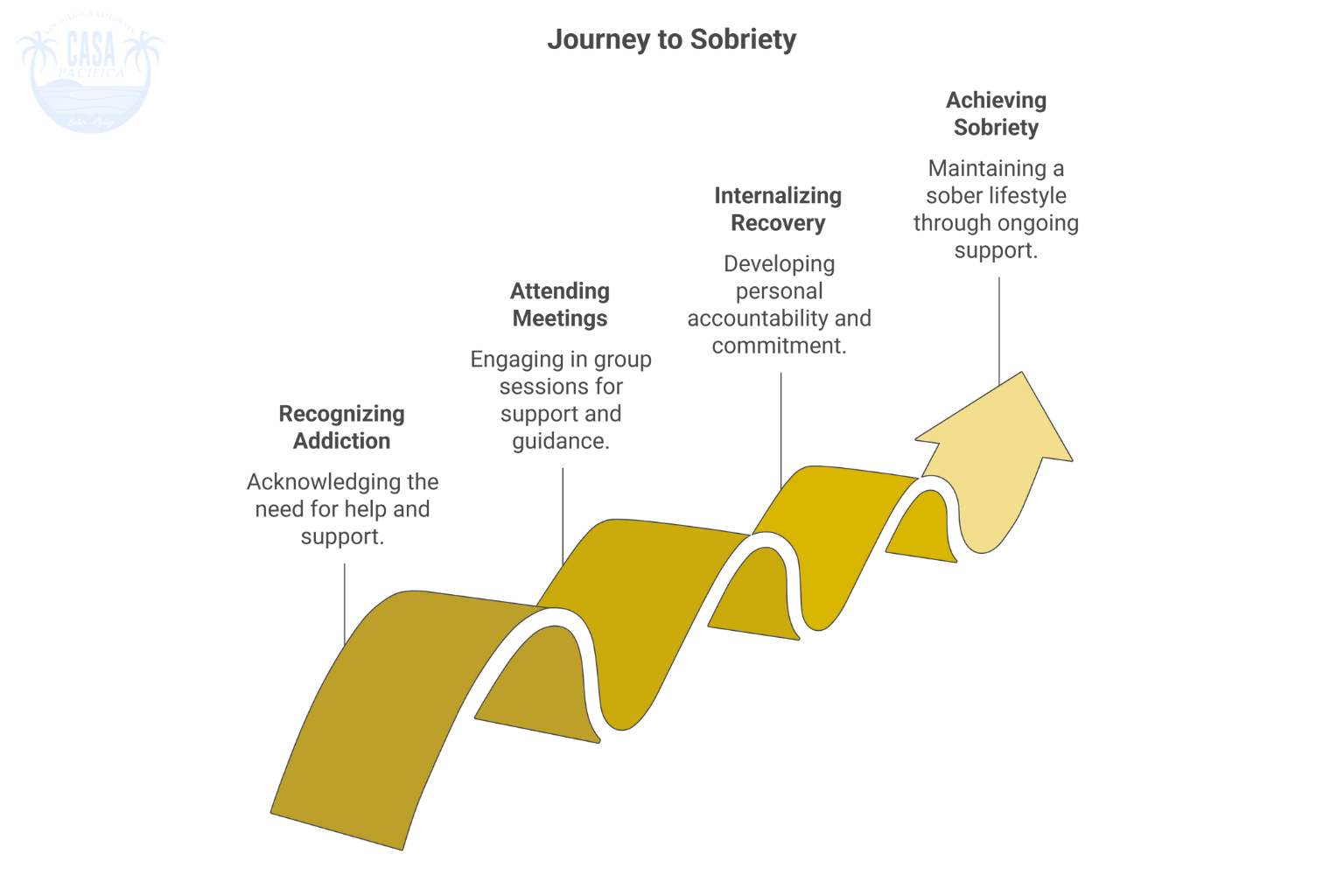
Gritty and raw realism were important aspects of the prestige TV era, and HBO’s The Wire emphatically delivered as it showed the interconnected dynamics of drug trafficking, corruption, and addiction in Baltimore. One of the most poignant scenes in The Wire involved Bubbles, a homeless opioid addict, pouring out his emotions at an AA meeting to mark his first sober anniversary. While addressing the group, Bubbles mentioned how he couldn’t reach his main AA sponsor or backup contacts for support when he was about to relapse. Ultimately, he didn’t get high because he felt the need to share how he felt when overcoming strong urges. This is an example of a strong step toward sobriety. It shows the importance of internalizing recovery and making commitments to personal accountability.
Finding Yourself at Meetings
In the Showtime series Brotherhood, which first ran from 2006 to 2008, the wife of a Rhode Island politician reveals her struggles with alcoholism, painkiller abuse, and infidelity. While estranged from her husband, she feels comfortable attending AA meetings with a member of an Irish crime family. The meetings provided Eileen Caffee with emotional relief, which she was able to channel into sobriety and an eventual reconciliation as the plot revealed she was pregnant.
Some Addicts’ Lack of Need for Meetings
Many studies show that more than 50 percent of addicts recover without attending any meetings. Recovery fellowships and support groups are highly recommended, but they’re not for everyone. Some people prefer digital spaces like the Online Intergroup of AA, which primarily schedules Zoom video conferences. Others prefer the discussion forum style of Reddit and other social networks. These options are ideal for people with introverted traits. If your treatment plan includes staying at a facility such as a Solana Beach sober living home and attending meetings, you should try them out before switching to online platforms. Meetings aren’t for everyone, and it’s possible to stay sober without them, but they’ve helped millions of addicts over many decades.
Cultivating strong structure, community and purpose
When you opt for a recovery path without regular meetings, you’ll want to build systems that replicate the benefits of peer gatherings in other ways. Start by establishing daily routines anchored in purpose. Wake at consistent times, get moving physically, attend to self-care, engage in meaningful work or service, and dedicate time for reflection or meditation. Surround yourself with trustworthy people who understand sobriety, and create regular check-ins — even if informal. Enroll in accountability coaching or consider sober living environments that provide continual structure and fellowship.
A strong social component remains essential. Just because you aren’t attending multiple meetings each week doesn’t mean you step into isolation. Join a recovery community in a different capacity, engage in shared sober activities, volunteer, rebuild friendships with recovery-minded peers, or participate in focused support groups that feel more aligned. Purpose plays a key role: when you replace old habits with meaningful goals — above and beyond just staying sober — you strengthen your identity in recovery and build confidence that sustains you when the inevitable rough days come.
Overcoming common challenges from skipping meetings
Stepping away from regular meeting attendance can trigger several challenges. You may feel:
- Less visible in the recovery world
- Uncertain about your support network
- Uncomfortable without the regular ritual of gathering
- Responsible for creating your own accountability
These feelings are normal. The solution lies in acknowledgment and strategy. If you feel less supported or more vulnerable during transitions, increase your one-to-one check-ins, reinforce your routines, and consider connecting with a mentor, coach or recovery friend consistently. Remember, the goal is not to avoid meetings forever or to skip them as a badge of independence — it’s to build a safe, reliable system that keeps you engaged, responsible and forward-moving.
When meetings may become helpful again — and why flexibility matters
Choosing to live sober without attending many meetings doesn’t mean abandoning them forever. There may come times when meetings become an ideal complement — for example during a significant life change, emotional crisis, travel, relapse risk, or when new community is needed. A flexible recovery plan recognizes that meetings are a tool, not a requirement, and that your needs can change over time. Good recovery plans are dynamic. They respond to your growth, challenge you to expand your support, and give you permission to return to gatherings when they add value.
The take-away: Recovery is personal, purposeful, and customizable
What matters most is that you feel supported, accountable, structured and connected — whether that happens through meetings, sober living housing, recovery coaching, or something uniquely your own. Sobriety doesn’t require a specific schedule or group; it requires you to build a lifestyle that consistently reflects your commitment. If you’re moving through recovery without regular meetings, what you’re doing instead should mirror the benefits of group gatherings: community, structure, check-ins, routine, purpose and accountability.
A sober living home can provide the support you need to achieve and maintain sobriety. Men who need assistance with staying sober can get the help they need at our Casa Pacifica Solana Beach Sober Living Home. Our men’s sober living mentorship program works with individual residents to develop customized plans that integrate treatment, aftercare, and recovery support resources, which results in meaningful experiences and positive outcomes in their new lives. Our services include coaching, sober companionship, and mentorship for those who are recovering from addiction to alcohol and other drugs.
If you’re ready to explore a supportive sober living environment, a structured house, meaningful peer connection and daily accountability, Casa Pacifica stands ready to walk with you. Recovery does not mean you must attend chapters and groups forever — it means you must find a system that keeps you alive to your best life.
Contact us today, Casa Pacifica is here to support you every step of the way.

Related Posts

Why Do I Feel More Socially Awkward without Alcohol?
Sobriety brings clarity. It brings fresh starts. But it can also bring discomfort — especially in social situations. Many people describe feeling more self-conscious or

Top Strategies for Preventing Relapse in Addiction Recovery
In July 2025, singer AJ McLean of the Backstreet Boys gave a candid interview to Fox News about celebrating four years of living in “straight

Understanding the Rules around Coming & Going in a Sober Living Home
In the 2024 comedic film Sweet Dreams, misfits from a sober living home in Los Angeles come together as a softball team to win a

How to Maintain Sobriety without AA: Exploring Alternative Paths to Recovery
The process of recovering from alcohol use disorder (AUD) or other types of substance abuse isn’t monolithic. There are many approaches, strategies, and treatment plans.