

Staying Accountable in Addiction Recovery: Internal & External Strategies
Table of Content
- 1 Understanding Accountability in Recovery
- 2 Guided Accountability
- 3 Practical and Constructive Accountability
- 4 External Accountability
- 5 Internal Accountability
- 6 Navigating Accountability in Real Life
- 7 If Accountability Is Weak What to Do
- 8 Conclusion: Accountability Is a Daily Choice That Builds a Strong Recovery Life
The essence of accountability in recovery involves taking responsibility for actions, behaviors, and positions. In the Alcoholics Anonymous fellowship, accountability is a core factor in many of the 12 steps, starting with an admission of being powerless over an intoxicating and addictive substance. If you maintain accountability throughout recovery, your journey will be easier and more effective, even if it doesn’t always feel that way.
Understanding Accountability in Recovery
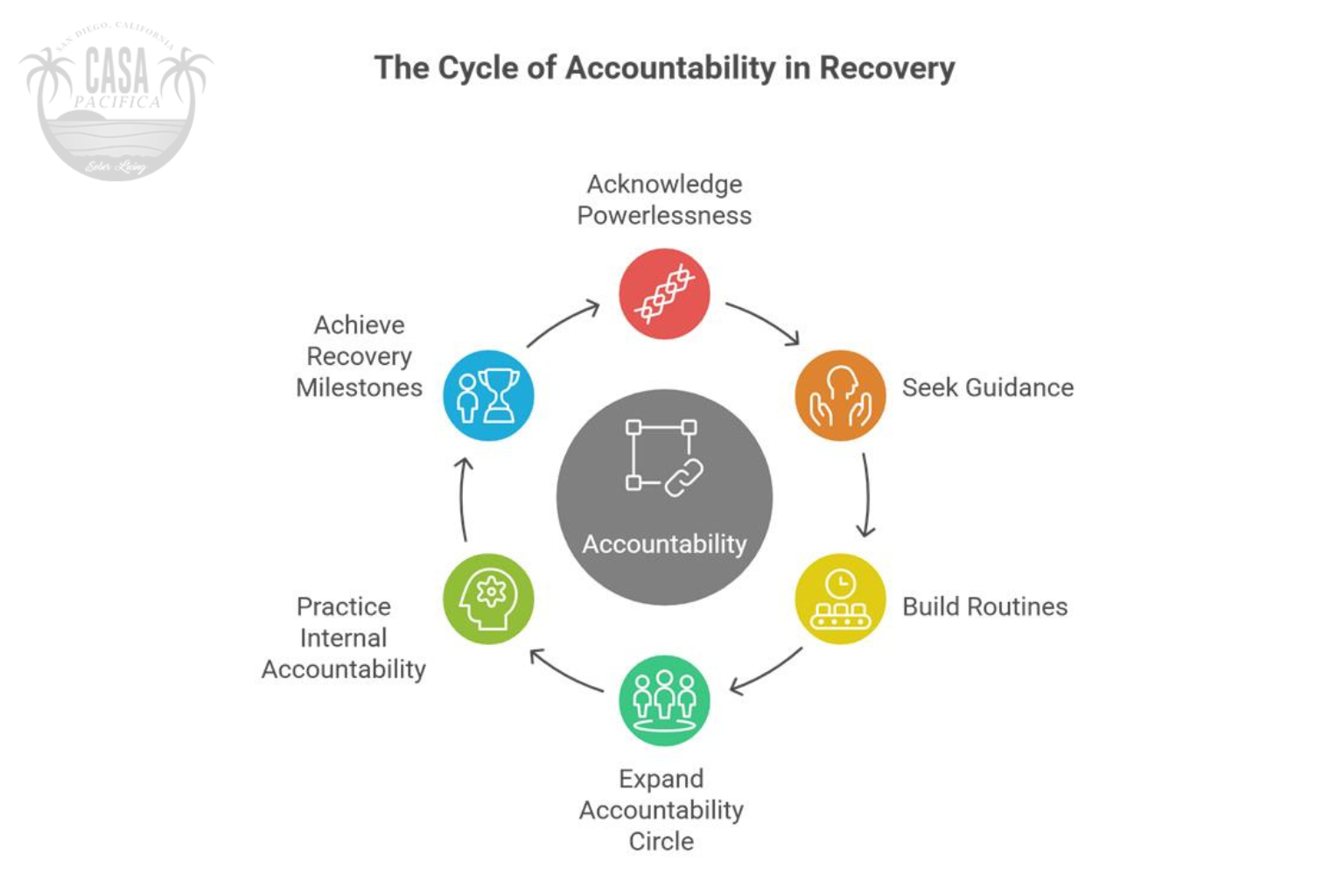
After the American Revolution, the Founding Fathers leaned on Thomas Paine to envision a government system to promote fairness and advance democratic principles. As the republic was forming, Paine described accountability from a perspective of trust. To this effect, he argued political leaders should be held accountable to all their constituents. When you enter addiction recovery, accountability becomes multidimensional. In the first step of AA, you’re accountable to yourself. The second and third steps involve accountability to your higher power. From steps eight through ten, you become accountable to those harmed by the bad decisions and wrongful actions that characterized your addiction.
Guided Accountability
Many alcoholics and drug addicts need guidance to foster and maintain accountability. You don’t get this guidance during detoxification. It usually begins when you enter an inpatient rehabilitation program where you break free from the substances, environments, and individuals that fueled your addiction. You may not feel the guidance because it’s inherent in the program. Your days and activities are structured around therapeutic sessions, and you may be subject to urine testing if you’re allowed to leave the facility.
Practical and Constructive Accountability
If your treatment plan recommends staying at a sober living home like Casa Pacifica, which provides Encinitas sober living housing, companionship, coaching, and mentorship for men, you’ll be held accountable primarily to your case manager, house manager, and fellow residents. If you work, study, or spend time with loved ones during your stay at a sober living center, your “circle of accountability” will expand significantly. You can think of this as constructive accountability because it helps you build healthy routines while fostering self discipline, which is crucial for long term recovery. Like in rehab, sticking to the life schedules of the sober living house will help you maintain accountability.
External Accountability
The guidance described above is part of external accountability. It’s facilitated through residential and transitional programs, but it’s up to you to follow the treatment guidelines. If you’re directly referred to outpatient programs such as talk therapy and behavioral conditioning, you’ll still get external guidance. However, it may not be closely structured. The goal of guiding you through external accountability is to help you reach recovery milestones and goals like advancing toward sobriety.
Internal Accountability
Every time you acknowledge the importance of holding yourself accountable to others, you’re practicing internal accountability. Essentially, you believe in yourself and your ability to take charge of your life. If there are external factors that could complicate your recovery journey, you learn to avoid them or manage them accordingly. You can talk about this aspect of your recovery with your higher power, counselors, and AA peers. However, personal accountability remains deep inside the psyche you’re developing as you recover.
Accountability is easiest in structured environments sober living homes, residential programs, coaches, scheduled check ins but the real test comes when you leave those environments, return to work or relationships, or face complex life demands again. That’s when accountability must transfer from external systems to internalized commitment. In those moments, you must carry the same standards you built under structure and apply them to your world outside. This might mean keeping meetings scheduled, having regular contact with a mentor, staying involved in fellowship, maintaining routines for sleep, wellness, work, community, and still checking in with people who care about your recovery. Doing this builds your commitment muscle and ensures your recovery is integrated into your life rather than isolated from it.
If Accountability Is Weak What to Do
If you notice you’re skipping check ins, avoiding meetings, becoming isolated, letting routines slide, or hiding your progress, these are important warning signs. Accountability may be weak. When this happens, the best response is to pause and recommit: reach out for support, reestablish your systems, lean into community, revisit your goals, rewrite your schedule, and reengage your support network. Recovery isn’t flawless; it is persistent. Accountability means doing the work even when you don’t feel like it, staying present when social pressure or emotional fatigue come up, and connecting when isolation whispers. Reinforcing accountability during vulnerable times is what keeps relapse risk low and recovery strong.
Conclusion: Accountability Is a Daily Choice That Builds a Strong Recovery Life
Accountability in recovery is not a burden it is a gift. It is the structure that allows healing to take place and growth to unfold. When you decide to live with accountability, you decide not to drift, not to hide, not to hope for recovery to happen by chance. Instead, you step into the active role: you show up, you reach out, you engage, you rebuild. Over time, this decision becomes a lifestyle. One meeting, one wellness practice, one check in, one honest conversation at a time, accountability builds the sober life you want to protect. If you are ready to commit to that path with strength, integrity, and support, your recovery can become not only sustainable but thriving.
If you’re newly sober and you need help with maintaining accountability and avoiding relapse, call on the compassionate team at Casa Pacifica. Along with providing San Diego sober living homes for men, we work with our individual residents to develop customized plans that integrate treatment, aftercare, recovery coaching, and recovery support. Our services also include sober companionship, interventions, safe transport, and mentorship for those who are recovering from addiction to alcohol and other drugs. For more information about our sober living facilities, call us today.

Related Posts

Why Are Boundaries Important in Addiction Recovery?
Emotional sobriety is the theoretical end of a journey undertaken to recover from addiction or substance abuse. To some extent, becoming emotionally sober is like

Staying Sober Through the Holidays: Tools from Casa Pacifica Residents
At Casa Pacifica Men’s Sober Livingin San Diego, residents have developed powerful tools and traditions that help them stay grounded, connected, and sober during the

How Does Structure Support Long-Term Addiction Recovery?
Final Gambit, one of the racehorses that finished at the top of the 2025 Kentucky Derby, was trained by a man on an addiction recovery

Top Physical Activities to Support Addiction Recovery
In November 2018, Outside magazine profiled a gym in Denver where recovering alcoholics and drug addicts enjoyed working out in a dedicated space. The Phoenix